


UCTP Brings Taíno Voices to the UN Expert Mechanism on the Rights of Indigenous Peoples

Updated: Aug 16
UCP Taíno News | Geneva, Switzerland | July 2026

The United Confederation of Taíno People (UCTP) proudly participated in the 19th Session of the United Nations Expert Mechanism on the Rights of Indigenous Peoples (EMRIP), held from 13–17 July 2026 at the Palais des Nations in Geneva, Switzerland. Established by the United Nations Human Rights Council, EMRIP is one of the world's principal international bodies dedicated to advancing the implementation of the United Nations Declaration on the Rights of Indigenous Peoples (UNDRIP). Each year, Indigenous leaders, governments, United Nations experts, and human rights organizations gather to examine emerging challenges, develop recommendations, and strengthen the realization of Indigenous Peoples' rights around the world.
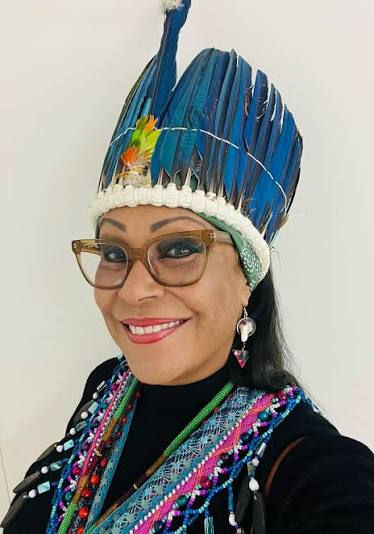
Representing the United Confederation of Taíno People this year were R. Múkaro Borrero, President; Tai Pelli, International Relations and Human Rights Officer; and Dr. Lizette Rivera, Liaison Officer and participant in the 2026 United Nations Indigenous Fellowship Programme.
Throughout the week, the UCTP delegation delivered formal interventions before the Expert Mechanism, participated in strategic meetings, collaborated with the Latin American and Caribbean Indigenous Caucus, worked closely with the International Indian Treaty Council (IITC), and met with Indigenous representatives from every region of the world to advance common priorities.
"For UCTP, participation in the United Nations is about much more than attending meetings. It is about ensuring that the voices, experiences, and aspirations of the Taíno People are present wherever international human rights standards are discussed and implemented" stated Tai Pelli.
Preparing Indigenous Leaders Before EMRIP
The work began even before the official opening of the Expert Mechanism. UCTP collaborated with Project Access Indigenous Partnership, the IITC, the UN Voluntary Fund, and DoCIP, in this year's Pre-EMRIP Orientation and Training Programme, which prepares Indigenous delegates to participate effectively within the official meeting.
UCTP President R. Múkaro Borrero and International Relations and Human Rights Officer Tai Pelli served as official presenters/trainers during the program. They shared practical guidance on advocacy, diplomacy, and effective engagement within EMRIP. Additional presenters were the Special Rapporteur on the Rights of Indigenous Peoples, Dr. Albert Barume and UN CERD member, Saul Vicente Vasquez. The orientation welcomed participants from multiple Indigenous Nations and organizations helping new delegates better understand UN procedures while strengthening Indigenous leadership and participation. UCTP is proud to contribute to these efforts, recognizing that meaningful participation begins with education, preparation, and mentorship.

Advocating for Stronger Support for Indigenous Participation
One of UCTP's formal interventions was delivered by Tai Pelli during the interactive dialogue with the United Nations Permanent Forum on Indigenous Issues, the Special Rapporteur on the Rights of Indigenous Peoples, the United Nations Voluntary Fund for Indigenous Peoples, and representatives of the UN Treaty Bodies.
Her intervention acknowledged the tremendous importance of the United Nations Voluntary Fund, which enables many Indigenous representatives to participate in international human rights processes.
However, she also highlighted an important gap. As Indigenous Peoples increasingly engage in global discussions concerning climate change, land degradation, artificial intelligence, digitalization, and environmental governance, many of these international processes remain outside the current mandate of the Voluntary Fund.
UCTP therefore called for expanding support so Indigenous representatives can participate in additional processes, including the United Nations Convention to Combat Desertification (UNCCD) and discussions surrounding Just Transition.
The message was clear: Indigenous Peoples must be present wherever decisions are being made that affect our lands, waters, cultures, and future generations.
Strengthening Indigenous Participation Throughout the United Nations
Another significant contribution came from Dr. Lizette Rivera, who addressed EMRIP during discussions on Enhanced Participation of Indigenous Peoples at the United Nations.
Dr. Rivera highlighted an issue that has long affected the Taíno People and many other Indigenous Peoples around the world.
Although the United Nations Declaration on the Rights of Indigenous Peoples affirms the rights of Indigenous Peoples to self-determination, participation in decision-making, and the maintenance of their representative institutions, Indigenous Peoples living in non-self-governing, unincorporated, and other territories that remain under colonial administration often continue to face barriers to the full realization of these rights.
Drawing attention to the more than 112,000 people who identified as Taíno in the 2020 United States Census, including approximately 50,000 in Borikén (Puerto Rico), Dr. Rivera noted that Indigenous Peoples living in these territorial contexts frequently remain overlooked in international Indigenous policy discussions despite their continuing presence and revitalization.
To address this gap, UCTP recommended that EMRIP undertake a dedicated study examining how the United Nations Declaration on the Rights of Indigenous Peoples is being implemented in these unique territorial contexts.
Such a study would not only benefit the Taíno People but could also strengthen recognition and participation for Indigenous Peoples living under similar political arrangements throughout the world.
Twenty Years of the United Nations Declaration
This year's EMRIP also began preparations for the upcoming twentieth anniversary of the adoption of the United Nations Declaration on the Rights of Indigenous Peoples. UCTP reminded participants that our organization proudly participated in the negotiations that ultimately led to the adoption of the Declaration in 2007. The delegation reaffirmed that while significant progress has been made internationally, implementation remains uneven.
UCTP continues to advocate for the full implementation of the Declaration through engagement with United Nations human rights mechanisms, including submissions before the Committee on the Elimination of Racial Discrimination (CERD) concerning the rights of the Taíno People in Puerto Rico.
"The work does not end with the adoption of international standards. It continues through implementation, accountability, and sustained advocacy" shared President Borrero.
Building Relationships Across Indigenous Nations
Much of the most important work at the United Nations occurs outside the formal meeting room.
Throughout the week, UCTP representatives participated in daily coordination meetings with the Latin American and Caribbean Indigenous Caucus, exchanged experiences with Indigenous leaders from around the world, and collaborated closely with the International Indian Treaty Council on shared advocacy priorities.
These relationships strengthen Indigenous solidarity and allow organizations to coordinate strategies, exchange knowledge, and present stronger collective positions before United Nations bodies.
For the Taíno People, these partnerships reaffirm that while our history is unique, many of the challenges we face are shared by Indigenous Peoples worldwide.

Looking Forward
Reflecting on the week, Borrero emphasized the importance of "sustained Indigenous participation within the United Nations system."
As the nineteenth session of EMRIP concluded, UCTP delegation returned home with new partnerships, renewed commitments, and an even stronger resolve to continue advancing the rights of Indigenous Peoples at the local, national, regional, and international levels.
"The work accomplished in Geneva belongs not only to those who attended—it belongs to all Taíno Peoples. Every intervention delivered, every relationship strengthened, and every recommendation advanced contributes to ensuring that the voices, rights, and aspirations of the Taíno People continue to be represented within the international human rights system" stated Borrero.
He continued "UCTP's participation at the United Nations is an investment in future generations. We remain committed to expanding opportunities for Taíno participation in international processes, sharing the outcomes of these discussions with our citizens, affiliates, and partners, and ensuring that our voices continue to help shape international policies that affect our Peoples, our territories, our cultures, and our collective future."
At the conclusion of this year's s session, the Expert Mechanism announced its intention to undertake a study addressing the situation of Indigenous Peoples living in non-self-governing territories—an issue that UCTP had specifically highlighted during its intervention on enhanced participation. While much work remains ahead, this announcement demonstrates that the concerns facing Indigenous Peoples in these unique territorial contexts are receiving increased attention within the United Nations system.
Taíno voices were heard.
Taíno recommendations are now part of the international record.
And UCTP's commitment to advancing the rights and self-determination of the Taíno People—and of other Indigenous Peoples throughout the Caribbean—remains as strong as ever. UCTPTN 07/28/2026

Comments